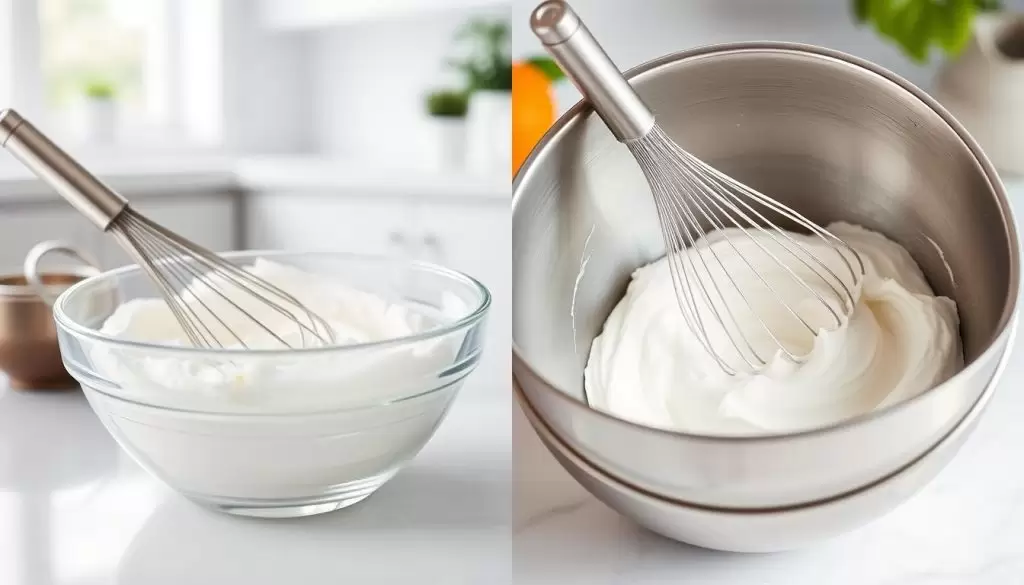
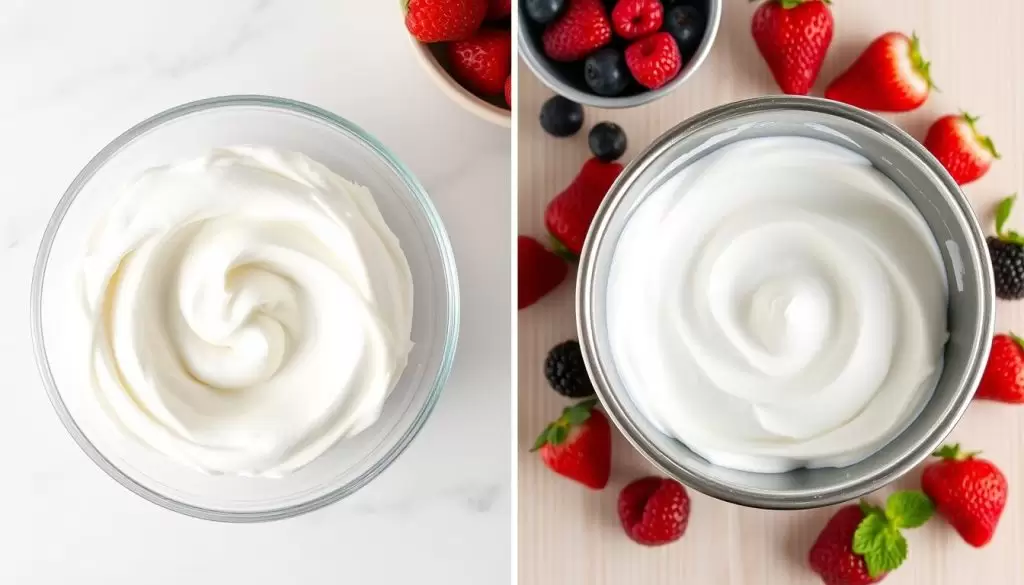
When it comes to whipping cream, the bowl you choose can significantly impact your results. The debate between using a glass vs metal bowl for whipping cream isn’t just about preference—it’s about science, technique, and understanding how different materials interact with your ingredients. In this comprehensive guide, we’ll explore the scientific principles behind whipping cream and how your choice of bowl material affects the outcome, helping you achieve that perfect, fluffy whipped cream every time.
The Science Behind Whipping Cream: Why Bowl Material Matters
Before diving into the glass vs metal bowl debate, it’s important to understand what happens when you whip cream. Whipping incorporates air into the fat molecules in cream, creating a network that traps air bubbles and gives whipped cream its characteristic light, fluffy texture.
Temperature and Thermal Conductivity
Temperature is crucial when whipping cream. Cream whips best when cold (around 35-40°F), as the fat molecules can better trap air bubbles. Different bowl materials have varying thermal conductivity properties:
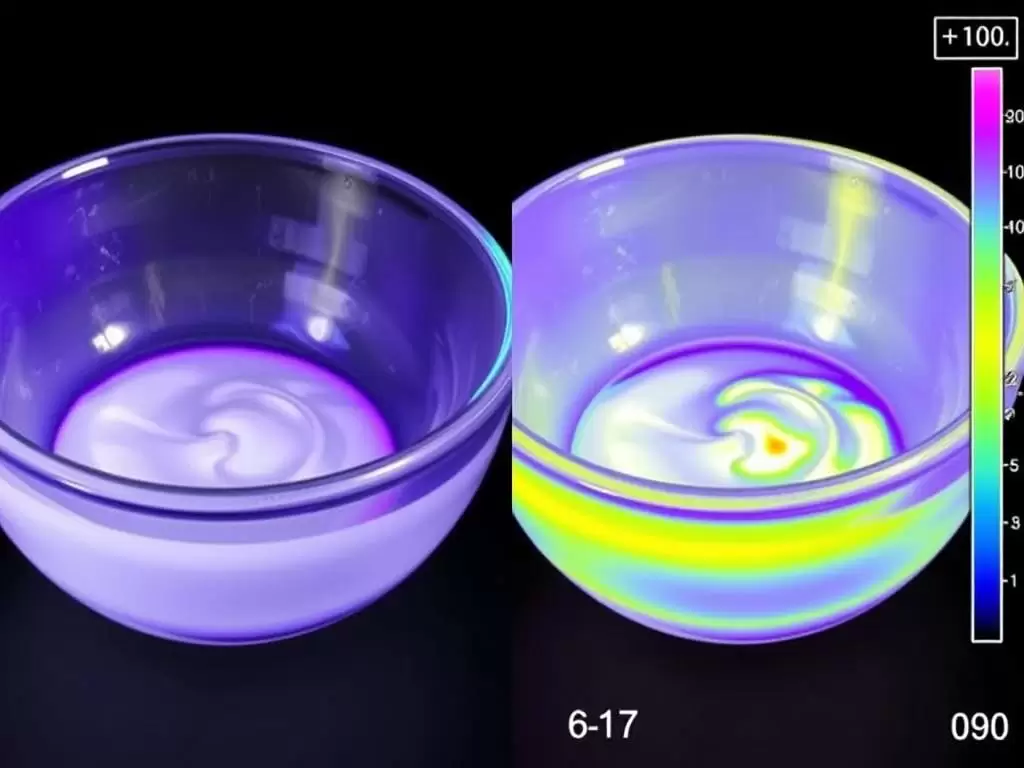
Metal Bowl Thermal Properties
- Excellent thermal conductor
- Quickly adopts the temperature of its contents
- Can be pre-chilled effectively
- Maintains cold temperature during whipping
- Helps fat in cream stay firm during whipping
Glass Bowl Thermal Properties
- Poor thermal conductor
- Insulates contents from external temperatures
- Retains pre-chilled temperature longer
- Warms more slowly from hand contact
- More stable temperature throughout whipping process
Surface Friction and Texture
The interior surface of your bowl affects how efficiently the cream whips:
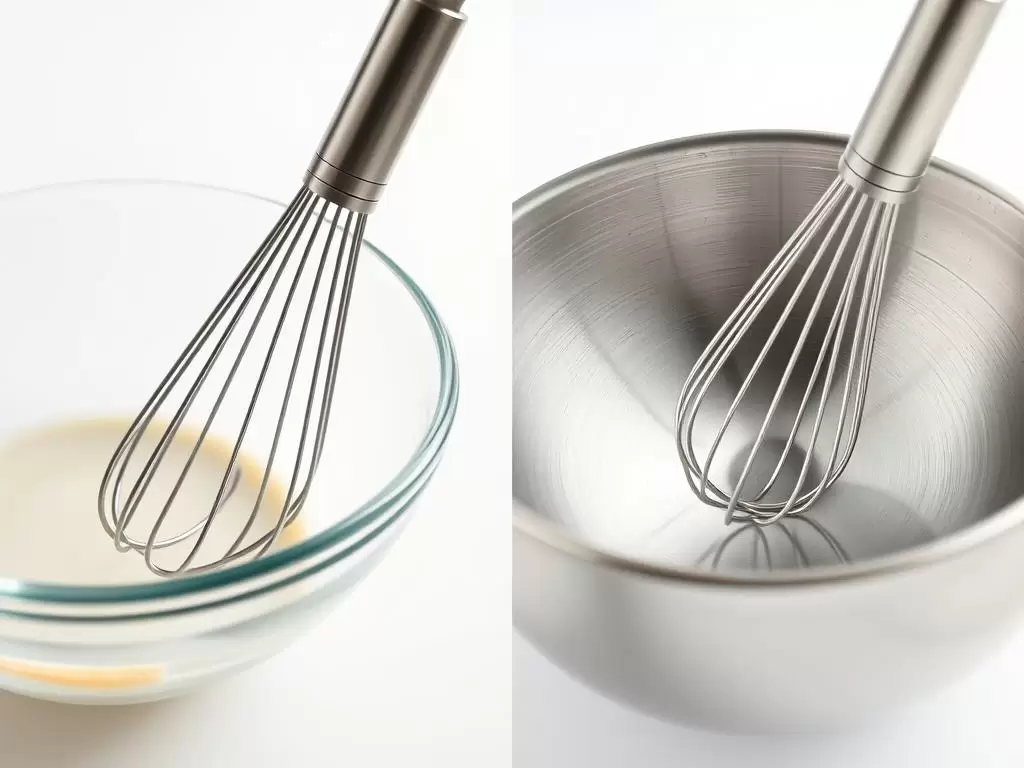
Metal Bowl Surface
- Slightly rougher microscopic surface
- Creates more friction with the whisk
- Helps break up fat molecules more efficiently
- Allows cream to climb up sides during whipping
- Promotes faster incorporation of air
Glass Bowl Surface
- Smoother surface at microscopic level
- Less friction with whipping implements
- Requires more vigorous whipping technique
- Cream tends to slide rather than climb
- May take longer to incorporate air
Metal Bowl Advantages for Whipping Cream
Professional chefs often prefer metal bowls, particularly stainless steel, when whipping cream. Here’s why a metal bowl might be your best choice:
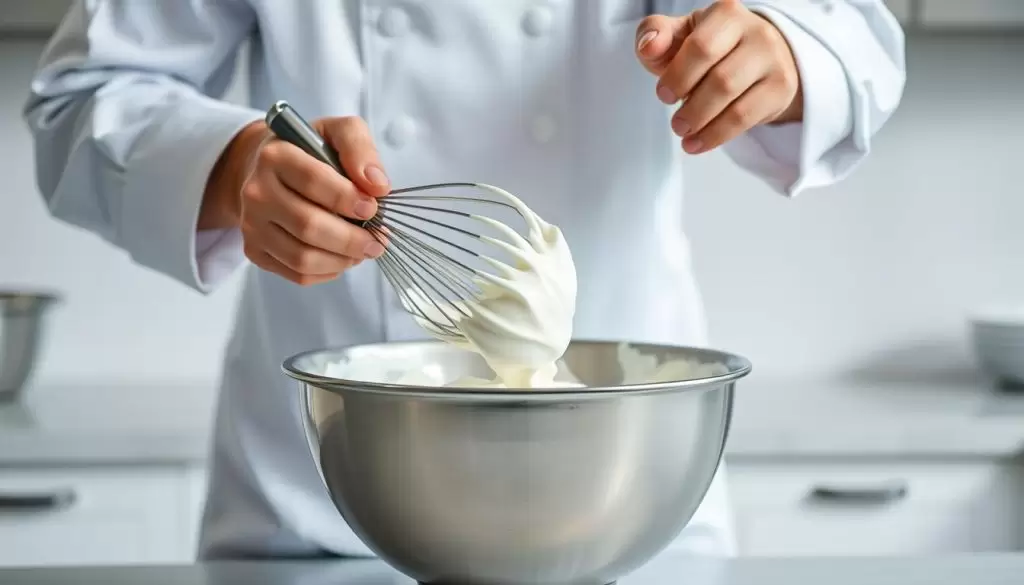
Advantages of Metal Bowls
- Superior Temperature Control: Metal’s high thermal conductivity means it can be quickly chilled in the freezer before use, helping keep cream cold throughout the whipping process.
- Faster Whipping Time: The slightly textured surface creates more friction, allowing cream to whip up to 30% faster than in glass bowls.
- Better Stability: The lightweight nature of metal bowls makes them easier to tilt and manipulate while whipping.
- Durability: Stainless steel bowls are virtually unbreakable, making them ideal for vigorous whipping techniques.
- Professional Standard: Most professional kitchens use metal bowls for whipping cream due to their efficiency.
Chef-Recommended Techniques for Metal Bowls
To maximize the benefits of a metal bowl when whipping cream:
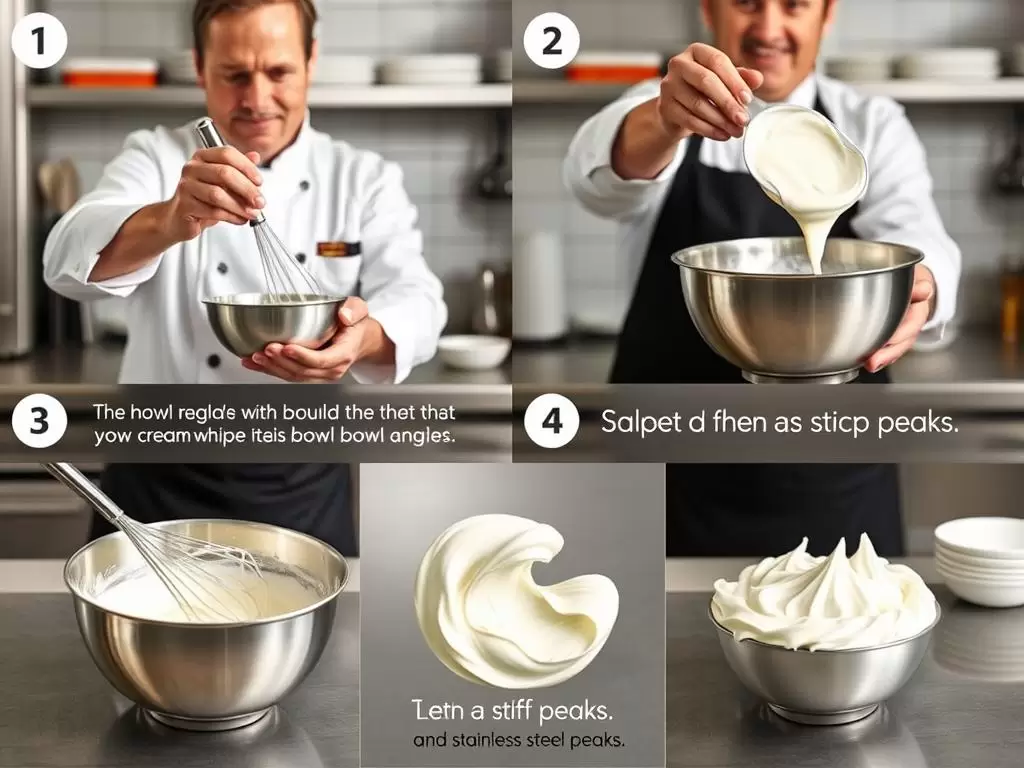
- Pre-chill the bowl: Place your metal bowl in the freezer for 15-20 minutes before whipping.
- Use cold cream: Ensure your heavy cream is straight from the refrigerator (35-40°F).
- Tilt the bowl: Hold the bowl at a 45-degree angle to maximize surface area and aeration.
- Whisk technique: Use a circular motion while keeping the whisk in contact with the bowl’s surface.
- Listen for changes: The sound will change from sloshing to a more muffled thud as peaks form.
“I always reach for my stainless steel bowl when whipping cream. The way the cold metal maintains temperature and creates friction with the whisk produces perfect results in half the time.”
Glass Bowl Advantages for Whipping Cream
While metal bowls are popular among professionals, glass bowls offer distinct advantages that make them preferable in certain situations:
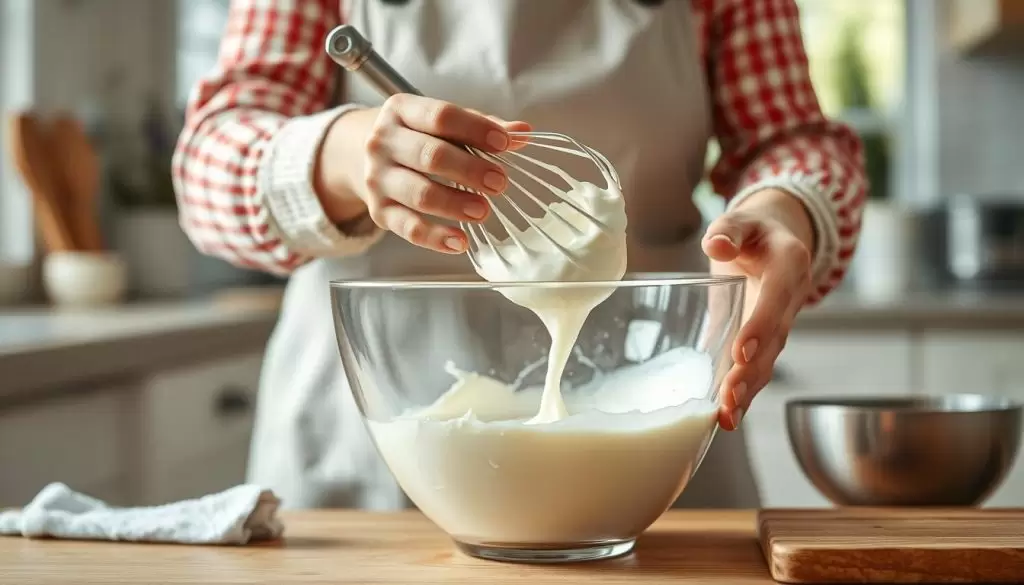
Advantages of Glass Bowls
- Visual Monitoring: Transparency allows you to see the cream’s consistency from all angles, helping prevent over-whipping.
- Temperature Stability: Glass retains cold temperature longer once chilled, providing more consistent conditions.
- Versatility: Can go from refrigerator to microwave, useful for multi-step recipes.
- Non-reactive Surface: Glass won’t interact with acidic ingredients that might be added to your whipped cream.
- Aesthetic Appeal: Attractive for serving whipped cream directly in the bowl at the table.
Chef-Recommended Techniques for Glass Bowls
To get the best results when whipping cream in a glass bowl:
- Extended pre-chilling: Refrigerate the glass bowl for at least 30 minutes (glass takes longer to chill than metal).
- Use a copper or balloon whisk: These provide better aeration to compensate for the smoother surface.
- Whip with more vigor: Apply slightly more energy to overcome the reduced friction.
- Watch for visual cues: Use the transparency to monitor consistency changes.
- Rest periodically: If the bowl warms, place it in the refrigerator for a few minutes to maintain temperature.
“For home bakers, I often recommend glass bowls for whipping cream. Being able to see exactly when soft or stiff peaks form helps prevent the common mistake of over-whipping, especially for beginners.”
3 Key Factors to Consider When Choosing Between Glass and Metal Bowls
When deciding whether to whip cream in a glass vs metal bowl, consider these critical factors that will influence your results:
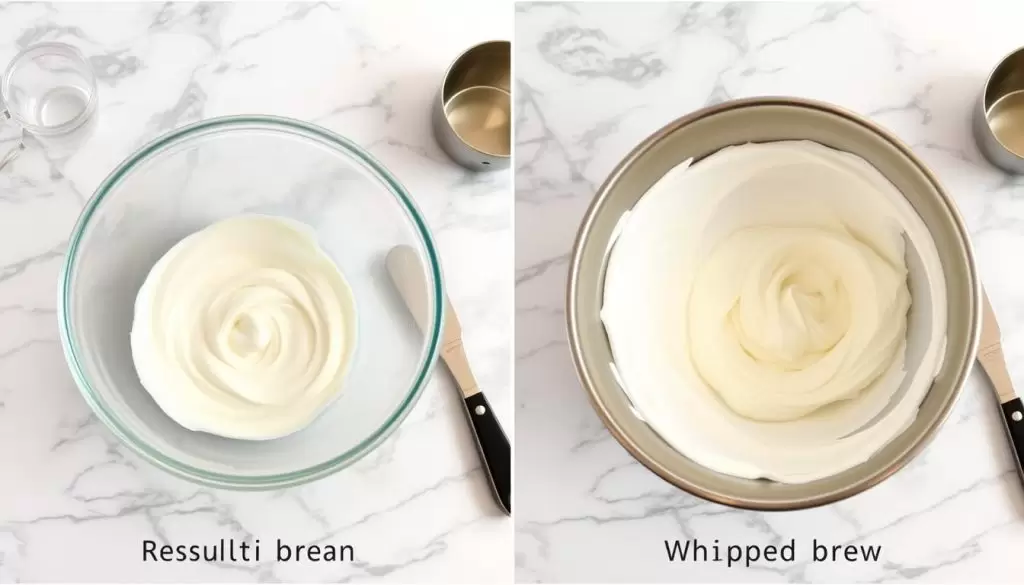
1. Your Kitchen Environment
Warm Kitchen Considerations
- Metal bowls warm up quickly in hot environments
- Glass provides better insulation against ambient heat
- Consider placing bowl over ice bath for extended whipping
- Air conditioning status affects bowl choice
Cool Kitchen Considerations
- Metal bowls maintain optimal temperature more easily
- Less need for insulation properties of glass
- Faster whipping time with metal is advantageous
- Pre-chilling either bowl type is still recommended
2. Cream Type and Fat Content
Heavy Cream (36-40% Fat)
- Whips easily in either bowl type
- Metal bowl provides faster results
- Less risk of over-whipping in glass bowl
- Higher fat content creates more stable peaks
Light Whipping Cream (30-35% Fat)
- More challenging to whip to stiff peaks
- Metal bowl’s efficiency becomes more important
- Temperature control is more critical
- Visual monitoring in glass helps prevent over-whipping
3. Whipping Method and Equipment
Hand Whipping
- Metal bowl’s efficiency reduces arm fatigue
- Lighter weight of metal makes handling easier
- Glass bowl’s stability prevents sliding
- Visual monitoring helps track progress
Electric Mixer
- Glass bowl’s weight provides stability
- Metal bowl may require holding in place
- Risk of scratching glass with beaters
- Metal conducts vibration from mixer better
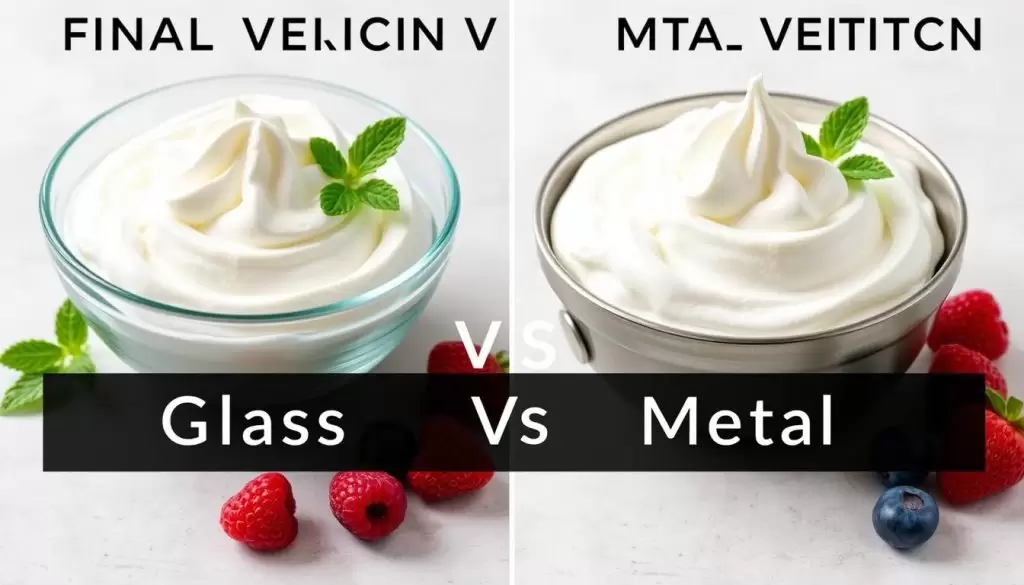
Glass vs Metal Bowl Comparison for Whipping Cream
This comprehensive comparison will help you decide which bowl is best for your specific whipping cream needs:
| Feature | Metal Bowl | Glass Bowl | Winner |
| Whipping Speed | Fast (2-3 minutes) | Slower (4-5 minutes) | Metal |
| Temperature Control | Excellent initial cooling, warms faster | Slower to cool, but maintains temperature longer | Tie (depends on duration) |
| Visibility of Cream Texture | Limited to surface view | Complete visibility through bowl | Glass |
| Weight/Handling | Lightweight, easy to tilt | Heavier, more stable on counter | Metal for handling, Glass for stability |
| Durability | Nearly unbreakable | Breakable, though tempered glass is sturdy | Metal |
| Versatility | Cannot use in microwave | Microwave and freezer safe | Glass |
| Professional Use | Standard in professional kitchens | Less common professionally | Metal |
| Beginner-Friendly | Faster results but easier to over-whip | Visual monitoring helps prevent mistakes | Glass |
Ready to Perfect Your Whipped Cream?
Investing in the right bowl makes a significant difference in your whipping results. For most home bakers, having both options provides maximum flexibility.
Expert Tips for Perfect Whipped Cream Regardless of Bowl Type
While the bowl material matters, these universal tips will help you achieve perfect whipped cream every time:
Temperature Management
- Chill everything: bowl, whisk, and cream
- Work in a cool area of your kitchen
- Consider placing your mixing bowl in an ice bath for extended whipping sessions
- Return cream to refrigerator if it begins to warm
- Avoid overheating from hand contact by holding bowl properly
Technique Refinement
- Start whipping at medium speed to incorporate air gradually
- Increase to high speed once cream begins to thicken
- Whip to soft peaks for toppings that will be dolloped
- Aim for medium peaks for piping decorations
- Stop slightly before desired consistency—cream continues to thicken
Stabilizing Whipped Cream
For longer-lasting whipped cream that won’t deflate quickly:
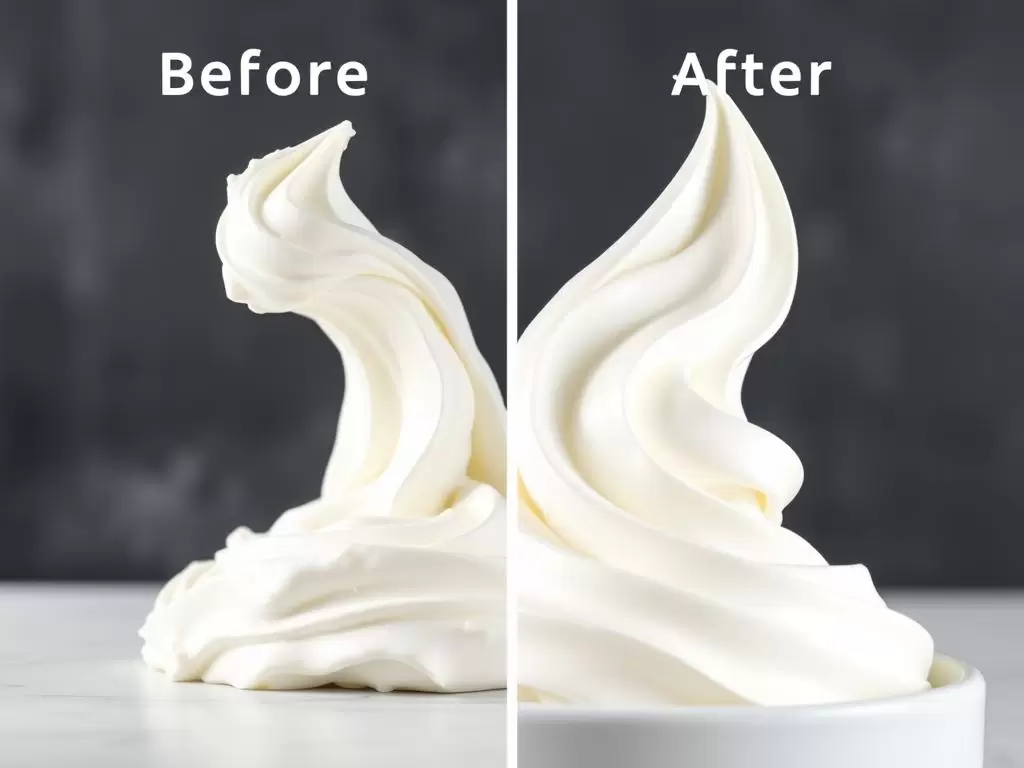
- Add 1-2 tablespoons of powdered sugar per cup of cream (contains cornstarch that helps stabilize)
- Incorporate 1-2 tablespoons of mascarpone cheese for richness and stability
- Use 1/4 teaspoon cream of tartar per cup of cream to strengthen air bubbles
- Add 1 tablespoon of instant vanilla pudding mix for a stable, flavored option
- Bloom 1 teaspoon of gelatin in 1 tablespoon cold water, heat until dissolved, cool slightly, then drizzle into partially whipped cream
Troubleshooting Common Whipped Cream Problems
Cream won’t whip: Your cream may be too warm or have insufficient fat content. Chill everything and ensure you’re using heavy cream (36-40% fat).
Cream is grainy: You’ve over-whipped and butter particles are forming. Gently fold in a few tablespoons of fresh cream to rescue it.
Cream deflates quickly: You may have under-whipped or not used a stabilizer. Whip to slightly firmer peaks and consider adding a stabilizer next time.
The Verdict: Which Bowl Is Best for Whipping Cream?
After examining the science and practical considerations of whether to whip cream in a glass vs metal bowl, here’s our verdict for different scenarios:
Choose Metal When:
- You need fast results
- You’re making large batches
- You have experience with whipping cream
- You’re in a professional setting
- You want maximum volume
Choose Glass When:
- You’re a beginner baker
- You want to monitor progress visually
- You need versatility for other tasks
- You’re in a warm kitchen
- You’re serving directly in the bowl
Ideal Setup:
- Have both bowl types available
- Use metal for efficiency
- Use glass for learning and versatility
- Match bowl to specific recipe needs
- Consider kitchen conditions each time
The truth is that both glass and metal bowls can produce excellent whipped cream when used correctly. The differences become most apparent in extreme conditions or specialized applications. For the average home baker, technique and ingredient quality will have a greater impact on your results than bowl material alone.
That said, if you’re serious about your whipped cream, a high-quality stainless steel bowl offers the most consistent results with the least effort. For those who value visual feedback during the process, a glass bowl provides unmatched visibility that can help prevent over-whipping.
Ultimately, the perfect whipped cream comes from understanding the science, applying proper technique, and selecting the right tools for your specific situation. Whether you choose to whip cream in a glass vs metal bowl, you now have the knowledge to make an informed decision and achieve delicious, perfectly whipped cream every time.