If you procure cream chargers wholesale for specialty distribution or multi-location bakeries and cafés, your first non‑negotiable is documentation: batch Certificates of Analysis (COA), E942 labeling, Safety Data Sheets (SDS), and traceable lot codes that match what lands on your dock. Lead with that verification, and the rest—MOQs, price‑per‑gram, palletization, and 5–7 business day regional delivery—falls into place.
This guide is written for two audiences:
- Specialty wholesale (kitchen supply and HORECA distributors) building reliable portfolios of food gases and accessories.
- Multi‑location bakeries/cafés with centralized purchasing and site‑level call‑offs that need consistent, food‑grade nitrous oxide supply.
No fluff—just what procurement, QA, and operations need to evaluate suppliers with confidence.

Portfolio at a glance: from 8g chargers to 3.3L tanks
Wholesale buyers typically mix SKUs to match back‑of‑house workflows, route density, and storage limits:
- 8g chargers: for classic siphon use and retail‑adjacent channels.
- 0.5L (310–375g class) mini cylinders: compact, low‑waste option for mobile or low‑volume prep.
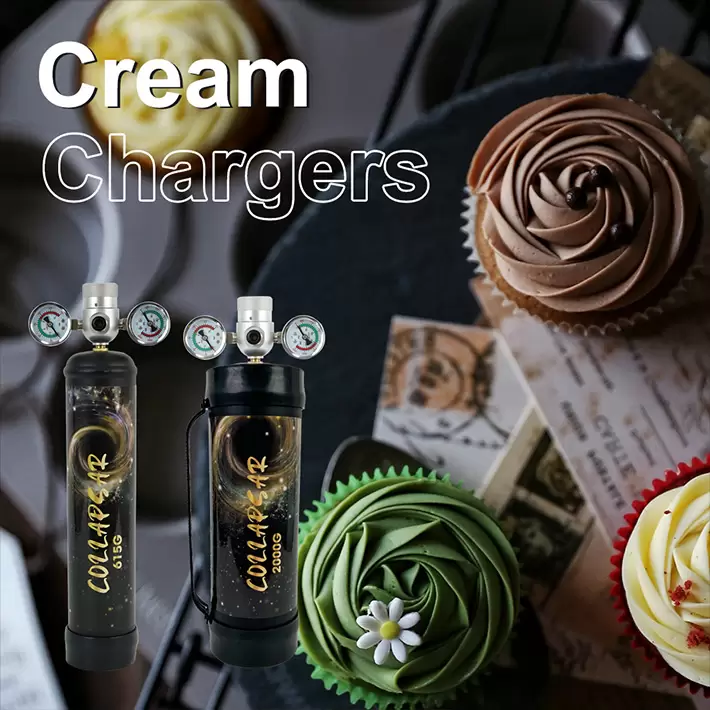
- 1L (615g), 2.2L (1364g), and 3.3L (2000g) tanks: higher‑throughput kitchens, commissaries, and distributor refill/change‑out efficiency.
For a quick sizing refresher across common cylinders, see the internal overview in the Nitrous Oxide Tank Sizes guide: compare 1L, 2.2L, and 3.3L options. Keep selections grounded in documented compatibility with your dispensers and in safe handling/storage SOPs.
Why documentation comes first for cream chargers wholesale
Procurement leaders prioritize paperwork because it protects food safety, accelerates customs and carrier moves, and simplifies recalls if they ever arise. At minimum, expect a supplier to provide:
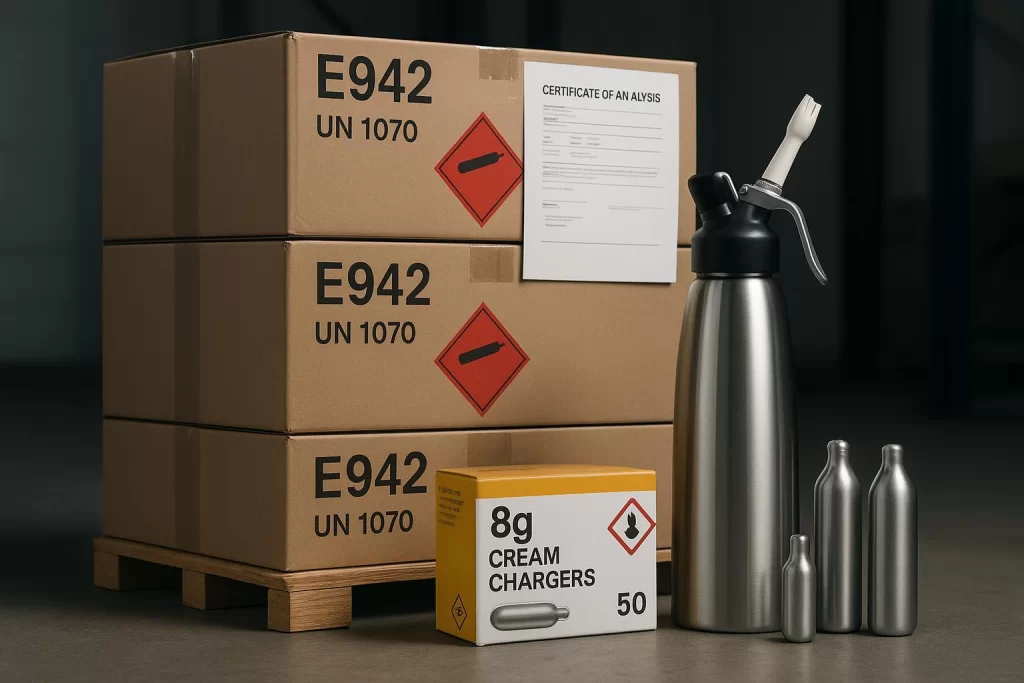
- COA per lot that references E 942 food‑grade specifications, lists analytical methods, and matches your delivered lot codes.
- SDS access for each SKU and jurisdiction, with clear GHS/CLP elements and UN 1070 transport classification.
- Primary and secondary packaging marked E 942 with legible lot codes to enable one‑step‑forward/one‑step‑back traceability.
Authoritative references you can cite in internal reviews include the US GRAS framework for nitrous oxide under 21 CFR Part 184 and the EU’s additive specifications for E 942. See the FDA’s eCFR index for direct food substances affirmed as GRAS, where nitrous oxide is listed and governed by good manufacturing practice in the nitrous oxide section under Subpart B: eCFR Title 21 Part 184 (current index). For the EU, specifications for E 942 are consolidated in Commission Regulation (EU) No 231/2012: EU 231/2012 additive specifications (E 942).
Safety note: food‑grade nitrous oxide is a gas under pressure and an oxidizer; it is not for inhalation. Follow local regulations, training, and SOPs for storage and use.
How to verify food‑grade N2O (E942) like a pro
Think of your verification routine as a simple three‑document match.
- Read the COA A good batch COA will include the product identifier (E 942 nitrous oxide for food use), lot number, test methods (e.g., references to pharmacopeial or equivalent methods), results for relevant residuals/impurities, lab accreditation details, date, and signature or approval stamp. The lot on the COA must match the lot physically printed on the cylinder/carton.
- Check the SDS In the EU and many aligned jurisdictions, nitrous oxide is usually classified as an oxidizing gas with standard GHS/CLP hazard communication; Section 14 will list UN 1070 and the transport class. Industry associations provide helpful primers; the European Industrial Gases Association’s context for food gases is a useful orientation: EIGA food gases overview. For quick transport classifications and label elements, cross‑reference the ADR/UN 1070 entry while relying on your supplier’s SDS as the binding document: ADR/UN 1070 overview.
- Confirm packaging and markings Labels beat color: cylinder/pack labels with E 942, UN 1070, and GHS/CLP pictograms are your primary identifiers. Color coding practices vary by standard; see an industry explainer on cylinder markings for what to expect on shoulders, valves, and adhesive labels: cylinder markings reference.
US vs EU: what procurement must know
Below is a compact, practical comparison. Use it to brief stakeholders and align documentation requests.
| Topic | United States (FDA/eCFR) | European Union (EU law/ADR/CLP) |
|---|---|---|
| Food‑use status | Nitrous oxide listed among direct food substances affirmed as GRAS; usage “at levels not to exceed good manufacturing practice” per Part 184 and the nitrous oxide entry. Source: eCFR Part 184. | E 942 (nitrous oxide) specifications in Commission Regulation (EU) No 231/2012; consult the consolidated annex for definition/identification/purity. Source: EU 231/2012 E 942. |
| Documentation | Batch COA aligned to food‑grade specs; SDS aligned to OSHA/HCS and transport regs; lot codes enable traceability. | Batch COA mapped to E 942 specs; CLP‑compliant SDS with hazard statements; ADR documents for transport where applicable; lot code traceability. |
| Transport & marking | UN 1070 per DOT/UN model regs; hazard class identifiers and GHS pictograms reflected in SDS/labels. | ADR Class 2.2 (non‑flammable) with 5.1 (oxidizer) subsidiary risk; labels and documentation per ADR/CLP. See ADR/UN 1070. |
Pro tip: Instead of memorizing numeric impurity thresholds, require the supplier’s COA to list the results and methods for the exact batch you receive. That keeps reviews current even if standards update.
Wholesale playbook: economics, MOQs, and packing that work
Your unit economics live or die on grams and handling. Here’s a simple way to benchmark vendors without getting lost in SKU complexity.
- Normalize to price‑per‑gram
- Convert each SKU’s price to cost per gram of N2O, including any valve/adapter costs if not reusable.
- Run the same math at your real order tiers (case, 10 cases, pallet, container) to expose scaling breaks.
- Map MOQs to demand and storage
- Align MOQ to your route and back‑of‑house storage. One pallet is a common B2B baseline; ensure you can rotate stock within shelf‑life and SOPs.
- Confirm palletization and labeling
- Ask for pallet height/weight, carton counts, and corner/strap protection; confirm outer carton E 942/UN 1070/lot code visibility for inbound checks.
- Get the documentation packet early
- Request sample COAs and SDS before onboarding; require shipment‑level COA/SDS and delivery notes to arrive electronically with ASN so inbound checks are fast.
Note: If you import or cross borders, your customs broker will need accurate HS codes and documents. Keep a shared folder with your SDS, template commercial invoices, and a COA index by lot.
What to expect from a food‑grade N2O supplier in the US and EU
From first inquiry to first delivery, the experience should feel predictable and auditable. Typical elements include business verification (registered entity, tax ID, sector fit), one‑pallet or higher MOQ, sample documentation on request, and delivery windows stated in business days. If a supplier offers multi‑warehouse coverage, ask how they handle backorders and split‑shipments so your sites still hit service levels.
For delivery expectations and returns norms in the US market, review a supplier’s policy page before you award volume—see an example of timelines, coverage scope, and returns windows here: Shipping & Returns policy overview.
Distributor onboarding: from inquiry to first replenishment
Use this as a sanity‑check flow when you assess distributor programs and build your internal SOPs.
- Submit your profile and documents Provide legal entity details, tax ID, sector description (HORECA, kitchen supply, bakery/café), and delivery addresses. Ask for a sample COA/SDS packet upfront.
- Size and MOQ alignment Confirm which SKUs you’ll start with (8g, 0.5L, 1L, 2.2L, 3.3L), expected monthly volume, and whether one‑pallet MOQ applies to your mix. Use the size refresher if needed: tank sizes comparison.
- Documentation & compliance check Your QA reviews the COA format, SDS versioning, and E 942/UN 1070 markings. Lot coding schema and recall readiness are clarified.
- Trial order and inbound SOP Place a first order at the smallest break that still resembles normal operations (often a pallet). On receipt, match lot codes to the COA and file documents in your shared repository.
- Schedule and service levels Lock in reorder cadence and cut‑off times. If the supplier quotes 5–7 business day local delivery windows, confirm warehouse locations and holiday exceptions.
For formal distributor applications, see the reference page: Become a Collapsar Retailer.
Practical micro‑example: what a compliant COA packet looks like
A compliant supplier will give you a clean, portable documentation set before you commit. For example, a vetted supplier such as COLLAPSAR can provide, upon request:
- A redacted batch COA showing product identifier (E 942 nitrous oxide for food use), the batch/lot code, analytical results with referenced methods, lab accreditation note, date, and approver.
- An SDS aligned to your jurisdiction (e.g., EU CLP or US HCS), with classification, GHS/CLP pictograms, and Section 14 listing UN 1070.
- Clear images or PDFs of primary/secondary packaging showing E 942 labeling and the same lot code you’ll receive.
Replicate this packet request with any supplier under consideration; consistency and speed of response are strong quality signals.
FAQ — procurement and compliance
Q: What documentation proves my cream chargers wholesale supply is truly food‑grade? A: A batch COA that references E 942 specifications and matches your lot codes, plus the current SDS and packaging/labels marked E 942 with UN 1070 and GHS/CLP pictograms. Anchor your internal review to the frameworks in the FDA’s GRAS listing and the EU’s 231/2012 additive specifications using the links above.
Q: How fast should I expect delivery for multi‑site bakery or café operations? A: Many suppliers operate regional warehouses with 5–7 business day delivery targets for in‑region addresses. Confirm cut‑off times, split‑shipment rules, and holiday exceptions in writing.
Q: Which cylinder sizes fit a high‑throughput kitchen? A: Many commissaries and higher‑volume sites move to 1L/615g, 2.2L/1364g, or 3.3L/2000g tanks to reduce change‑outs. Validate compatibility and safe‑handling SOPs, then compare price‑per‑gram across the size mix using your real order tiers.
Q: What transport classifications and labels should I see? A: Expect UN 1070 and hazard communication for an oxidizing gas under pressure. Your supplier’s SDS is the binding reference; ADR summaries and industry explainers help with training and audits.